The rooms
Machiya and sentō: the concert rooms
What a Kyoto machiya townhouse and a sentō public bathhouse were built for, and why each makes a good room for koto and shamisen.
Reserve a seat at the concert ↗Two buildings, two sounds
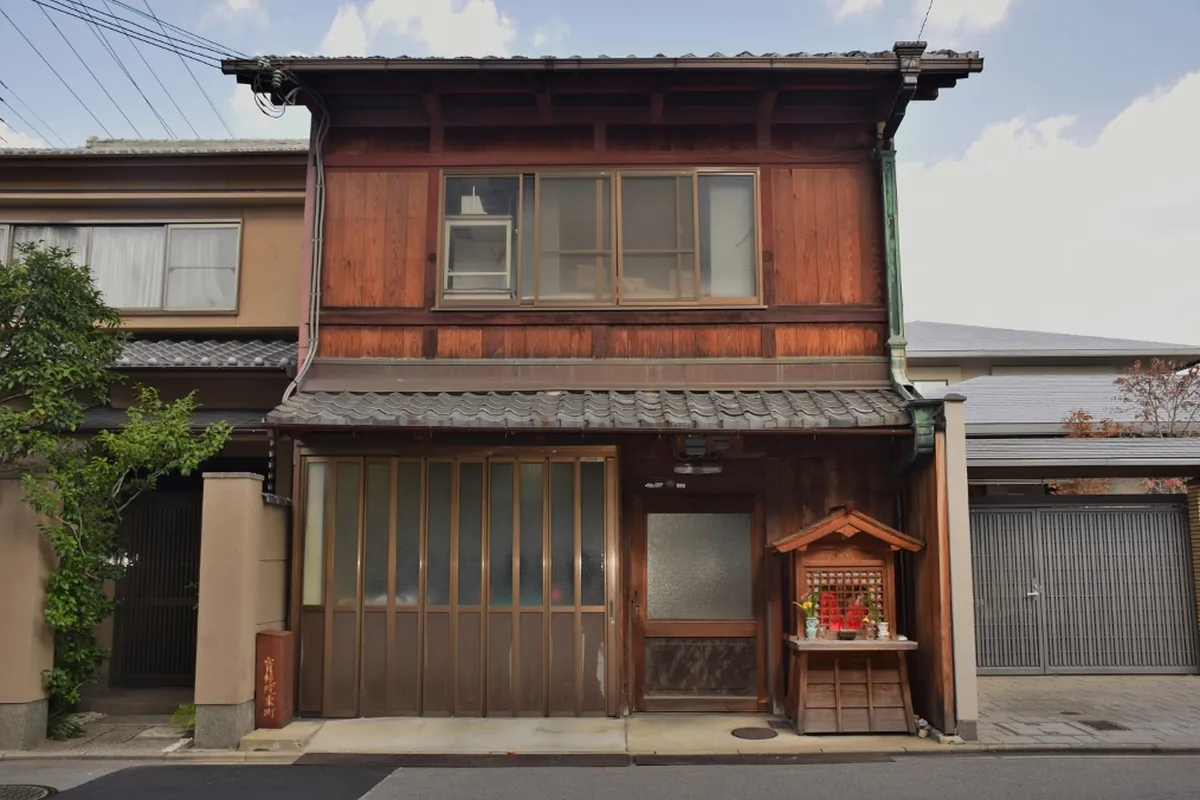
The two concert options happen in two kinds of ordinary Japanese building rather than in a theatre. One is a traditional wooden townhouse of the machiya type, the home-and-shop form that defines downtown Kyoto. The other is a sentō, a communal public bath. Each building was made for something other than music, and each now holds an audience small enough to hear a single string.
What a machiya is
Machiya are traditional wooden townhouses found throughout Japan and typified in Kyoto. They originated as early as the Heian period and kept developing into the Meiji period, housing urban merchants and craftsmen. The usual Kyoto machiya is long and narrow, with a small frontage, a deep plan, earthen walls, a tiled roof and often a small courtyard garden. Rooms behind the shop are floored with raised timber and covered in tatami mats.
A house that changes shape
The sliding doors in a machiya, the fusuma and shōji, can be opened, closed or removed to alter the number, size and shape of rooms. The largest room, the zashiki, looks out on the garden and once doubled as a reception room for special guests. That flexibility suits a house that has become a small concert room, where a handful of listeners sit close enough to see the player's hands.
The Kyoto climate indoors
Kyoto has cold winters and hot, humid summers, and the machiya was designed for both. Layers of sliding doors could be added to keep heat in or taken away to let air through, and woven bamboo screens were hung in summer to pass air but block sun. The courtyard gardens brought light and air into the middle of the house. A concert in such a building is shaped by that history of seasons.
What a sentō is
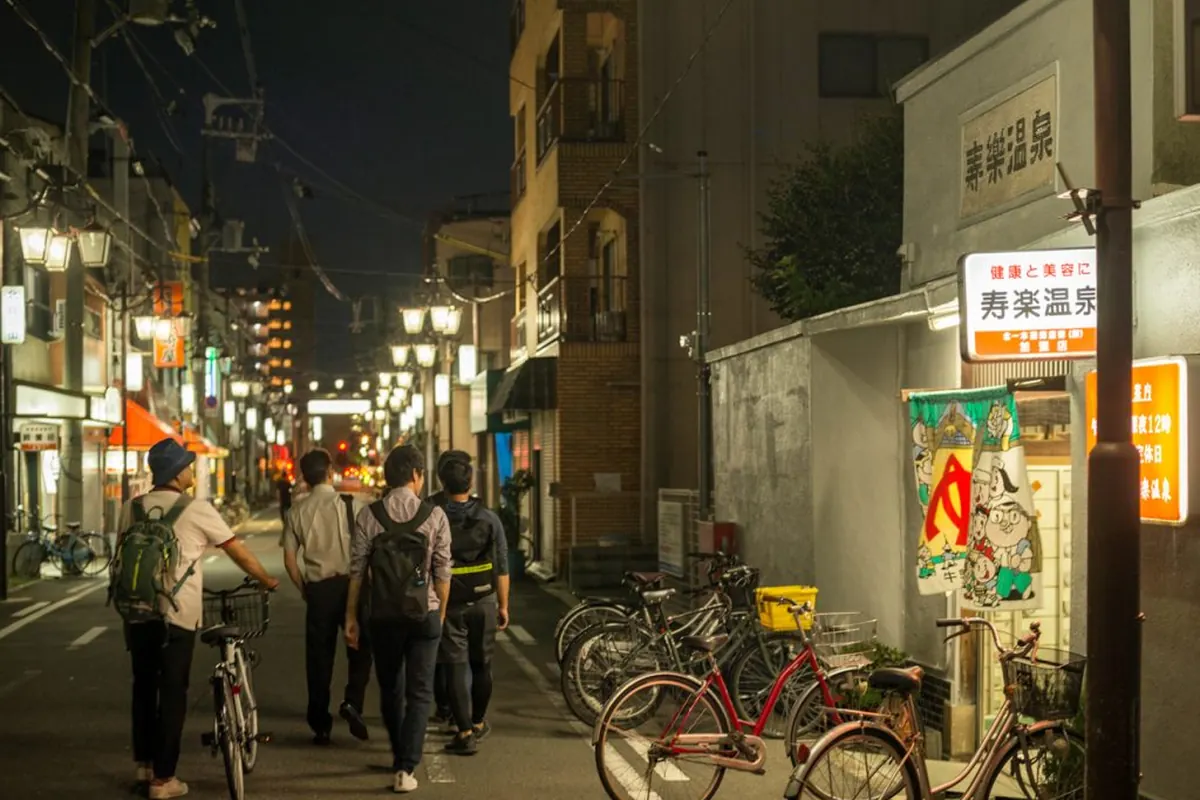
A sentō is a Japanese communal bathhouse where customers pay for entry. Traditional sentō had a barrier separating the sexes within a large room and a single large bath, and the entrance often looks like a temple, with a curtain, the noren, marked with the character for hot water. Since the second half of the twentieth century their numbers have decreased, as more Japanese homes now have their own baths.
Tile, height and echo
The bathing area of a sentō is usually tiled, with high ceilings and large windows. Those hard tiled surfaces are what give a former bathhouse its long, natural reverberation. The organiser describes the bathhouse hall as a place where tiled walls produce a dramatic, enveloping sound, which suits a koto duet. You hear each note ring and decay, a quite different effect from the dry closeness of the townhouse.
Why the contrast works
The townhouse offers intimacy: a few people, a wooden room and a soloist whose fingerwork you can follow. The bathhouse offers resonance: a larger audience, a duet and sound that carries. The same koto sounds different in each, which is the reason to pick the room deliberately rather than by chance. For a first visit, the townhouse is the more informative; for a return visit, the bathhouse offers a change of colour.
Reading the front of a machiya
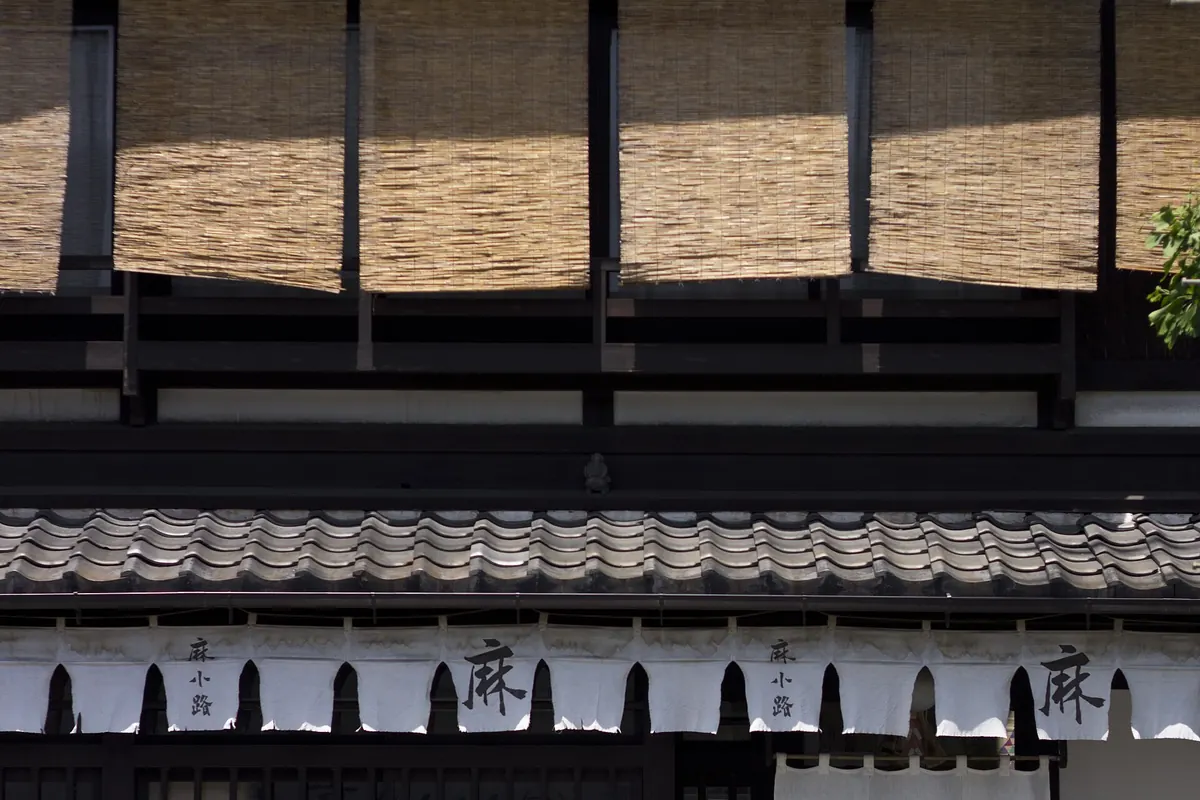
The front of a machiya features wooden lattices called kōshi, and the style of lattice once indicated the type of shop inside: thread shops, rice sellers, geisha houses and liquor stores each had their own. The same houses also took part in the Gion Matsuri, when families displayed their treasures, folding screens and heirlooms in the front rooms and the houses hosted spectators along the parade route. Walking to a townhouse concert, look at the lattices and the narrow frontage as you go.
Respecting the buildings
Treat each room as you would a home: remove your shoes at the entrance, wear socks, keep your voice down and follow the staff's instructions. At the bathhouse there is no bathing, and the bath facilities are not part of the visit. Handle cushions and chairs with care, and leave the room as you found it.
Sources