The instrument
Shamisen: three strings, one plectrum
Where the shamisen came from, why it buzzes, how its necks and skins differ by genre and what it adds when it plays beside the koto.
Reserve a seat at the concert ↗What the name means
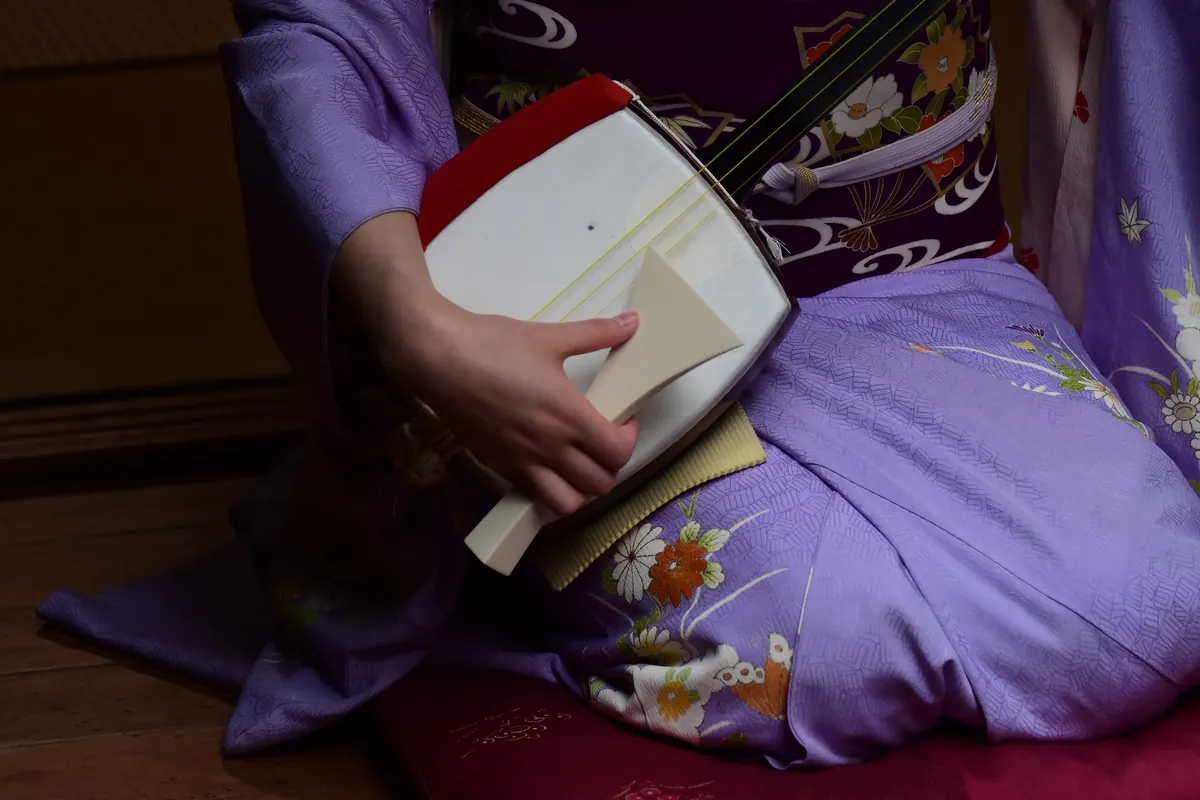
Shamisen, also spelled samisen or called sangen, means three strings. It is a three-stringed Japanese lute with a fretless neck and a drum-like body, played with a large plectrum called a bachi. In a koto and shamisen concert the two instruments make a pair. The koto is a zither that lies on the floor and is plucked with finger picks; the shamisen is held on the lap and struck, and its sound is sharper and more percussive.
A traveller from China
The shamisen is descended from the Chinese sanxian. The sanxian reached the Ryukyu Kingdom, present-day Okinawa, in the sixteenth century, where it became the sanshin, and the shamisen derives from that instrument. It is believed that its ancestor came to the mainland through the port city of Sakai, near Osaka, in the same century. Its early body was covered with snakeskin, and it spread from entertainers to many kinds of stage music.
How it is built
The body, called the dō, is a hollow frame covered front and back with skin, much as on a banjo. Traditionally the skin was dog or cat, and contemporary instruments often use synthetic material. The three strings were traditionally silk, though nylon is common now. They pass over a bridge, the koma, that rests directly on the skin. The neck of the shamisen is fretless and slimmer than that of a guitar or banjo.
The buzz
The lowest string is set lower at the nut on purpose, so that it buzzes against the neck. That buzz is called sawari, and it gives the shamisen a rough, resonant edge that Western ears sometimes compare to a sitar. When you sit close in a small room, you can hear the buzz continue after the note is struck. It is a deliberate part of the instrument's design.
Necks and genres
Shamisen are classed by neck width: hosozao (thin), chūzao (medium) and futozao (thick). The thin neck of the nagauta shamisen suits the quick, virtuosic playing demanded in kabuki. The medium neck favours jiuta, a classical style, with a broader, more mellow sound. The thick neck is used for the robust music of the puppet theatre and for tsugaru, a modern style from northern Honshū. The instrument you hear depends on the repertoire.
Geisha, theatre and the street
The shamisen accompanied blind monks and later entertainment districts, and it became a core instrument of kabuki and puppet theatre. Kouta, a style of short songs, was developed by and performed mostly by geisha and maiko. In the early twentieth century, blind musicians shaped tsugaru-jamisen, a fast, improvised style based on folk song. That range, from refined chamber music to street energy, is why one instrument can sound so different from one concert to the next.
Koto and shamisen together
The two instruments share a programme, and the Kyoto musician Yatsuhashi Kengyō began as a shamisen player before learning the koto. In a concert the contrast works in your favour: the koto offers a ringing, plucked sound and the shamisen a drier, buzzing one. A solo set that moves between them gives you both textures within a single hour.
The shamisen today
The shamisen has never been only a museum instrument. Tsugaru-jamisen has lent itself to modern use and appears in jazz and rock, and its virtuosic style is sometimes compared to bluegrass banjo. Contemporary players mix traditional pieces with new arrangements, which is why a concert programme can pair a classical piece with a modern one on the same instrument. Gen's own page notes that the shamisen now appears in pop, rock and jazz as well as in traditional genres.
What to listen for
Listen for the buzz of the lowest string, and for the plectrum itself: in some styles, such as the striking technique of tsugaru, the bachi hits the skin as well as the strings. If the concert includes a classical piece and a modern one, compare how the same instrument sounds in each. The commentary at the start explains each part, so you will know what you are hearing.
Sources